

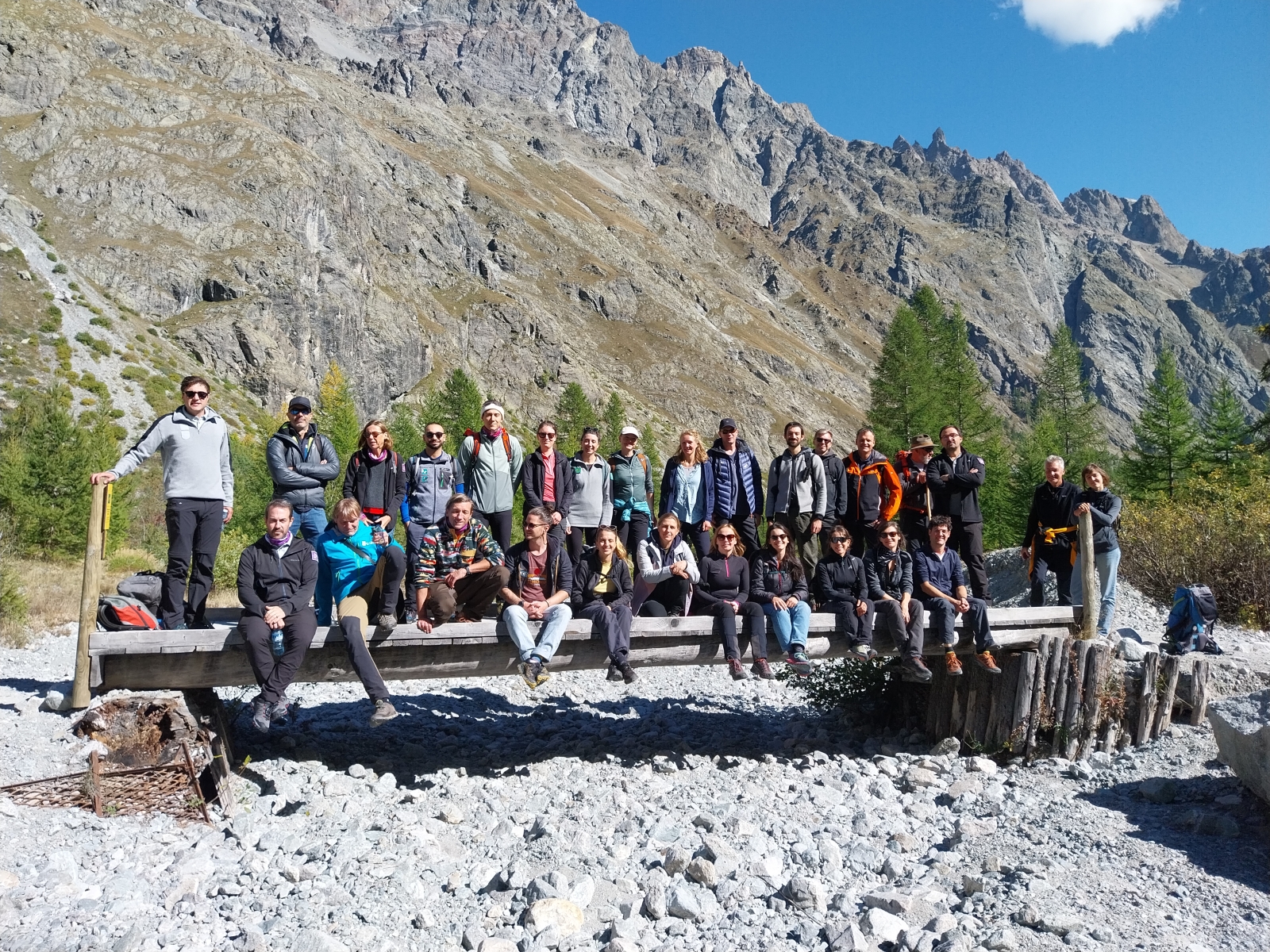
The journey of LiveAlpsNature (Interreg Alpine Space) through the project’s pilot sites continues. The third meeting took place from September 30th to October 2nd in Vallouise (FR), in one of the valleys of the Parc National des Écrins.
Just over a year into the project, the first results are taking shape. Two surveys were launched over the summer in the partner protected areas and collected over 1,200 responses from visitors and over 130 from tourism operators. Once analyzed, this data will contribute to the overview of the current situation and ongoing trends in the Alps regarding nature-based activities. The study of the impacts of these activities on species disturbance and habitat fragmentation is also underway, through analysis of spatial data, case studies and insights from experts. Another noteworthy outcome is the development of the BREATHE Index. Intended as an evaluation tool to assess the potential of natural areas to promote human health, it will guide the design of innovative offers based on the One Health approach.
During the meeting, participants also worked together on the many ongoing project activities. These include the definition of a protocol to better integrate verified data from protected areas (e.g. official trails and regulations) into digital platforms, and the development of climate scenarios to predict how global warming will influence outdoor practices and how this evolution will, in turn, affect biodiversity.
The field excursion led by rangers and researchers from the Parc National des Écrins provided an opportunity to further explore this last aspect. Starting from Pré de Madame Carle, participants walked through a landscape shaped by two glaciers, the Glacier Blanc and the Glacier Noir, both rapidly shrinking. This sparked discussion about the links between climate change and tourism. As an example, phenomena like glacier retreat increase risks from landslides and floods, posing a threat to visitor safety. On the other hand, rising temperatures make higher altitudes (and alpine lakes) more attractive for people, causing disturbance to biodiversity in remote areas and potentially affecting fragile ecosystems emerging from recently deglaciated zones. In this context, monitoring visitor flows, through underground counters or analyses of the most common activities, plays a crucial role in guiding management strategies that ensure human frequentation aligns with the core goal of nature conservation.
The next stop of the LiveAlpsNature journey will be the Parco Naturale Mont Avic (IT)!
For more information about the project: https://www.alpine-space.eu/project/livealpsnature/
The LiveAlpsNature project is co-funded by the European Union through the Interreg Alpine Space programme, which supports cross-border cooperation projects between seven Alpine countries.
© photo: Parc National des Écrins / Aurore Seignemartin